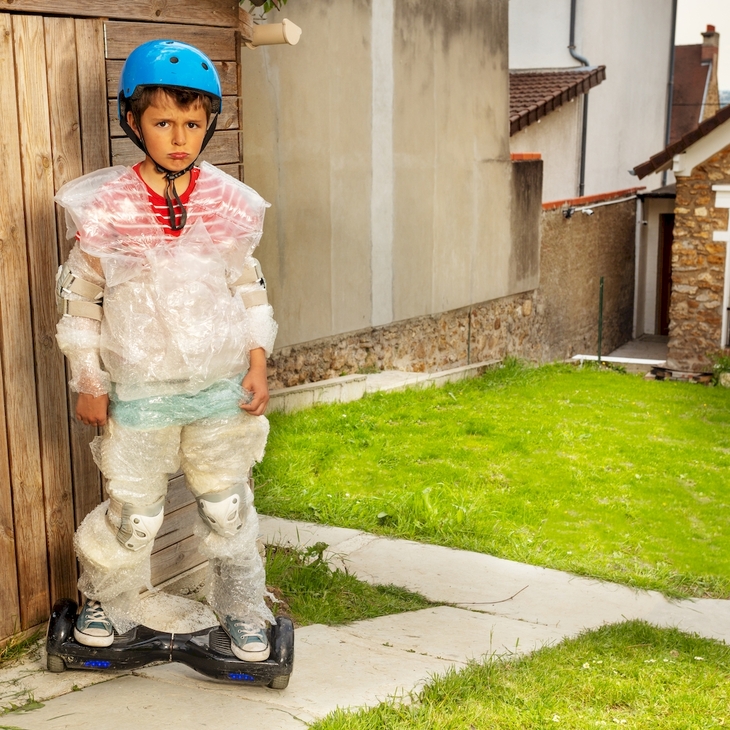
Of course, all parents want to raise a healthy, independent, purposeful, balanced, and physically developed child. But sometimes parents, without knowing it, do everything in their power to prevent this purposefulness and independence. And this obstacle lies in the excessive involvement of parents in the lives of children, the so-called "оverprotection".
But how not to miss this fine line between obsessive hyper-care and ordinary concern? How to understand that you have not turned from a simply caring father or mother into an obsessive guardian who prevents the development of potential and inhibits the growth of independence of your child? We suggest you familiarize yourself with the following "symptoms of оverprotection", which may help to prevent or correct mistakes in raising children.
1. Protection against failing.
Nobody wants to fail. But, sometimes, we forget that failures are an impetus to learning and improving ourselves. No one is perfect. When your child fails — don't consider that it's your fault and you're a bad parent.
Losing is normal. Allow the child to experience failure and see how he copes with it. You may be surprised.
2. Do everything for the child.
We all know — it is much easier and faster to do something yourself, for example, make the bed, clean the room, fold the clothes. But responsibility begins with simple and small steps that you should allow your child to take on their own. Just believe, even a one-year-old can help with cleaning while learning responsibility.
Set a simple daily duty for the child, appropriate for his age, and you will notice that he treats the rest of the tasks with greater responsibility.
3. Overdoing with consolation.
Any mother's heart "breaks" when her child is upset because something doesn't work out, because of a fall, or because one of the other children is not pretty friendly.
It is good if you will be there in such moments, but this does not mean that you need excessively console the child, promise "mountains of gold" in the toy store, and treat him only with ice cream and candies instead of dinner because of a small incident. Very essential to find the line between consolation and overly intense reactions in yourself. Your overly intense reactions will not allow the child to concentrate and analyze his emotions.
4. Managing the child's friendships.
Many people believe that their child must necessarily be friends with those whom the parents impose on him or, on the contrary, not be friends with this or that child for some reason known to adults. Do not manipulate. The child must learn to choose friends and build relationships on his own. Of course, it may be difficult for the child to figure it out, but that's what parents are for. Just help them gently to make the right choice, giving reasonable arguments for or against such a friendship.
But there is another side to the coin: you can always intervene when it is necessary to solve the problem of a so-called friendship that causes harm, for example, when another child causes physical or moral damage to your child.
5. Constantly reminding about the danger.
Naturally, ensuring the child's safety is the number 1 priority of parents. But scaring a child with every little thing is not the best tactic.
Pay attention to how often you tell your child: "You can't!", "Stop it!", "Stop!" etc. Catch yourself with this thought the next time you disrupt the child away from his activity, and try to stop yourself. You don't want your child to hear only negativity in everything he tries to do. Try not to interfere because we are learning from our mistakes. Of course, we are not talking about threatening life or health situations. Find the middle ground.
6. Endless checks.
Agree that caring parents sometimes exaggerate. Yes, we want to know that the child is doing well, but calling every hour when the child is out for a walk or at school — is a little bit wrong acting. With such actions, we will only anger the son or daughter. It is much easier to agree with the child that she will warn you about when she/he reached the school or training so that you do not need to call again.
7. Excessive protection from reality.
Unfortunately, today's world is arranged in such a way, that children can freely play violent PC games, and watch inappropriate images and videos on TV or the computer (which used to be only on paid channels and only after midnight). And no matter how you limit this content at home, the child, if he wants, will find it in another place: either at school or with friends.
You still won't be able to 100% protect the child from anything harmful, and you won't be able to raise him far from the real world, it's simply impossible.
Therefore, it is better to accustom yourself and the child to live in the harsh realities of the modern world. It is necessary to explain to children the danger of repeating a Tik Tok video after friends or characters. Explain what situation the child can get into by doing reckless things. Also, children like real-life stories that happened to you (such stories serve as examples of mistakes made by someone they trust, and will help them to get the right conclusions about what is right or wrong to perform).
And remember, children need space to grow and develop, make mistakes, and learn from them. If you are an overprotective parent, try to take a step back. Give your child a little more freedom. Guide her along the way, but do not protect her from everything in a row.
